Marion Nestle
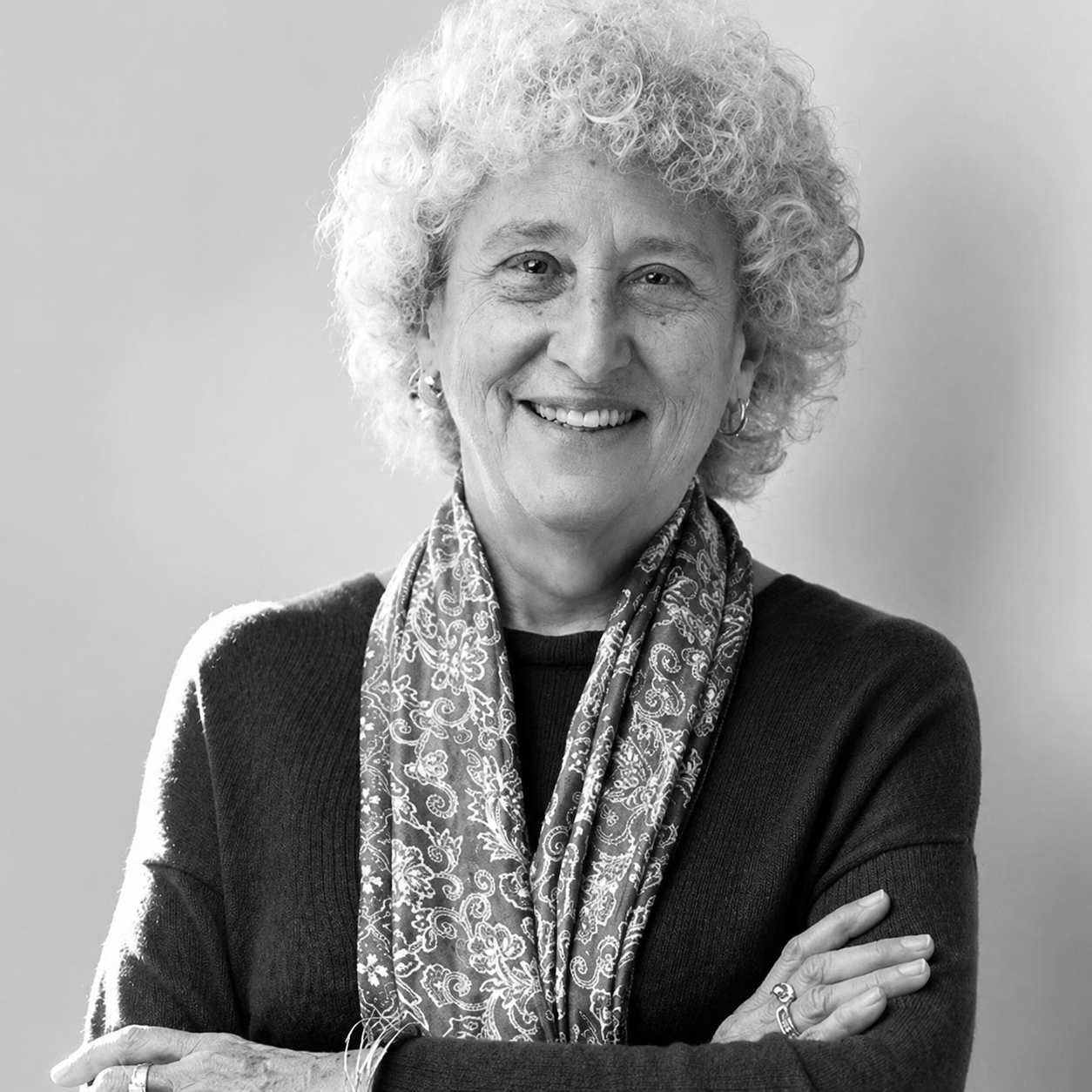
Description: Marion Nestle is Professor Emerita of Nutrition, Food Studies, and Public Health at New York University. Her research examines how the food industry shapes what Americans eat through advertising, lobbying, and the strategic funding of nutrition science. In this episode, we discuss how food companies engineer overconsumption, why industry-funded research is compromised before it begins, and how a single congressional appropriations act stripped sustainability language from the 2015 Dietary Guidelines. Marion also breaks down the corn economy as a lens into U.S. agricultural subsidies, and explains why she believes fixing the food system starts with getting money out of politics.
Websites:
Food Politics (personal website)
Publications:
Favorite Food News Sources:
Heritage Foundation (reports)
Cato Institute (reports)
Congressional Research Service (reports)
General Accountability Office (reports)
Other:
Show Notes:
[0:07] Food Industry Power
[1:30] Marketing and Manipulation
[3:43] Research for Profit
[6:53] From Food to Profit
[8:49] Lobbying the Guidelines
[11:53] Personal Responsibility Limits
[13:0] Health and Environmental Costs
[18:21] Farm Policy and Politics
[19:29] Organizing for Change
[21:18] Rethinking Agriculture
[24:15] Health andFood Systems
[25:50] Farmers and Barriers
[28:25] Trust and Skepticism
[31:42] Funding Cuts and Industry
[34:30] Goals for a Better System
[37:37] Reasons for Hope
[38:51] Anti-Hunger and Upstream Fixes
[40:28] Finding Reliable Voices
[43:33] Advice for Food Careers
Unedited AI Generated Transcript:
Brent Valentine:
[0:00] Welcome back to Discovering Academia. We are two college students who travel
Brent Valentine:
[0:03] the world talking with academics about their research, passions, and current events. Today, we talk with Marion Nestle , Professor Emerita of Nutrition, Food Studies, and Public Health at New York University.
Keller Kramer:
[0:15] Professor Nestle's work examines how the food industry shapes what Americans eat and what that means for public health and agricultural policy. In this episode, we discuss how food companies engineer overconsumption and why industry-funded research is compromised by design, and why personal responsibility is an unfair ask when you're up against a $1.5 trillion industry. We hope you enjoy. Welcome, Professor Marian Nestle. Thank you for coming on today.
Marion Nestle:
[0:40] Glad to be here.
Keller Kramer:
[0:42] We'd love to start off by hearing how does the food industry shape the food environment?
Marion Nestle:
[0:48] Well, you know, the purpose of a food company is to sell food. They're not public health agencies. They're not, social service agencies, their job is to sell food and as much of it as possible at higher prices possible to as many people as often. And so what they want to do is to create a food environment in which people are encouraged to eat as much as possible all the time in as large amounts as possible. And unfortunately, we're the beneficiaries of that food environment,
Marion Nestle:
[1:26] and it's really hard if you're an individual to deal with it.
Brent Valentine:
[1:30] Yeah. And then could you walk us through a few of the tactics they use to create this food environment, like lobbying, marketing, or funding research?
Marion Nestle:
[1:39] Well, marketing is the most obvious one. Advertising, they spend billions of dollars a year to advertise a product, there isn't a product in the supermarket that doesn't have a multi-million dollar budget per year advertising. And if those products are located where people can actually see them, you know, at eye level or the ends of aisles or at the cash register, oh my goodness, then companies are spending a fortune to place those there. That's the most obvious. And then there are other ways that are more subtle, and that is they sponsor community events. They fund research to give them favorable results about the health qualities of the product. They lobbied behind the scenes to make sure that no federal agency passes a law that's going to impair their ability to make a profit. You know, they're driven by the way our investment system works, which is to put corporate profits first.
Keller Kramer:
[2:56] Within the research environment, it's not so much that they're going in, they're paying professors to give them hard results, but how does that exactly work? Are they just driving questions that are maybe not actual impact?
Marion Nestle:
[3:10] Yeah, it's much more subtle than that. I mean, I don't know a researcher who takes money from food companies to do research who thinks for a second that the money compromises what they do. It apparently operates at an unconscious level. So that, I mean, there's an enormous amount of research that shows the influence of industry funding on research, mostly from pharmaceutical drugs.
Marion Nestle:
[3:40] But the food examples are the same. They're not any different. And the way it works is I get all the time solicitations from trade associations saying, we've got $50,000. This would be a small one. We've got $50,000. We're looking for research that will show that our products prevent heart disease, prevent cancer, promote cognition in children, you know, whatever else. They're looking for, you know, prevent colds, whatever else they're looking for. They're not going to fund a research proposal that doesn't have a really good chance of showing that. And so that's for starters. And then for the researchers, and the researchers are going to write proposals that they think are going to show benefits. They're going to design the research question in a way that is going to show benefits. Without even thinking about it, without thinking, wait a minute, I'm doing marketing research here. That's not what I had in mind. And so when I talk to people who do this kind of research, they think they're doing science.
Marion Nestle:
[4:59] How come you're not talking about the quality of the way we do these studies? Because that's not where the problem is. The problem isn't the way the research question is designed or in the way the results are interpreted.
Brent Valentine:
[5:14] Yeah. I think a really interesting manifestation of that is kind of the sugar versus fat debate. Could you explain kind of what that is and provide a little bit of background?
Marion Nestle:
[5:25] Well, I don't even like to talk about that because that's not what we eat. People don't eat sugar except in soft drinks, and they don't eat fat except in butter, cheese. I don't know. Even that has protein in it. Foods are mixtures of protein, fat, and carbohydrate. So anytime you're talking about fat versus carbohydrate, you're already confusing the issue because that's not what people eat. People eat foods. Actually, they don't even eat foods. They eat diets. They eat collections of foods. So that when you're taking one food component out and trying to figure out what it does, you're already in trouble. You're out of context. So you're in trouble. But there's a long history of the Sugar Association attempting to influence research so that the focus would be on fat. There's a long history of soda companies funding research to show that drinking sodas is bad for people. An awful lot of non-industry funded research shows the opposite. And every trade association for every food, no matter what it is, is putting money into research because they can use it for marketing purposes.
Keller Kramer:
[6:54] And looking out, I guess, like more broadly, because you mentioned how the primary driver is profit and investors. Has that always been the case or are there kind of clear moments in history, at least in the U.S., where that trend shifted from being food for people to food for profit?
Marion Nestle:
[7:12] Yeah, you can. Well, it's always been for profit, but it wasn't quite as brutal as it is now. But we can date this to a particular speech. In 1981, when Jack Welch, who was the head of General Electric, made a speech in which he promoted Milton Friedman's idea that the only purpose of a corporation was. Profit for stockholders. And somehow that speech had enormous impact. It caught on and companies adopted it. And that's when they stopped paying workers. They killed unions. They sent all manufacturing offshore. The results of that have been terrible for the country not just for food companies but for everybody because if profits are the number one issue and you don't have corporations taking care of their workers henry ford wanted his workers to be paid well enough so that they could buy the cars you know and now we have people working at walmart who are on food stamps because they're not making enough money to survive without it, which means taxpayers are supporting Walmart's low wages. And Walmart isn't the only one. I mean, as the cost of living has gone up, the cost of wages haven't gone up. And that's because companies can't pay higher wages because if they do, their stockholders will complain. Yeah.
Brent Valentine:
[8:50] Yeah, certainly. And then kind of aligning with those profit motives, it influences governmental recommendations. Could you explain your experience with lobbyists influencing your own ability to put out the best guidelines you were trying to advise on?
Marion Nestle:
[9:08] Oh, no lobbyist ever talks to me. They know better than that. But I've certainly observed the way that lobbyists influence things. I mean, first of all, there's a law that requires lobbyists to register with the government. And there's a lot of information available if you're willing to do that kind of work, and there are websites that will do that for you that will tell you how much money companies spend on lobbying. For example, when I wrote my book, Soda Politics, there were at that time 67 lobbyists registered in Washington, D.C. Who were working for Coca-Cola, PepsiCo, or the American Beverage Association. And they made sure that every single member of Congress knew what their interests were. They don't have to say what their position is on something, but they do have to say what issues they're lobbying about. And it's things that you would never have thought of, but it's certainly things that the companies would think of, where there are laws being considered that might affect profits. The companies have an interest in a position, and they want the members of Congress to know what those positions are because, amongst other things, they donate to congressional campaigns.
Marion Nestle:
[10:39] So there are some pretty interesting examples. Dietary guidelines are an obvious one. There, because the process has been transparent, you can go online and read what the different food companies are stating about dietary guidelines and what they say is pretty predictable. They don't want guidelines to suggest reducing intake of any of their products. And, you know, I guess there was one example that was just so blatant, and that was that when the 2015 dietary guidelines wanted to put the word sustainability in and talk about sustainability as it relates to meat intake, Like, Congress put language in an Agricultural Appropriations Act that directed the Secretary of Agriculture to absolutely block that. And the guidelines came out, not saying anything about sustainability, and the next ones didn't either. That's lobbying in action.
Keller Kramer:
[11:54] Looking at the individual in this food environment, how do you think about the need to have personal responsibility of your own diet, of what you're intaking, with the fact there are so many systematic, I don't know if bears is the right word, but complexities. There are companies putting out dietary guidelines that they are claiming are the truth, and there's many, many millions, if not billions of dollars being spent to confuse you and divert you in the wrong way. How is someone that might not be well-educated, that is struggling with a chronic ailment, that might be obese, how do they navigate this environment?
Marion Nestle:
[12:33] Well, they don't. I mean, if you're trying to eat healthfully in today's food environment, you're up against a $1.5 trillion industry that's trying to get you to eat unhealthfully. That's their goal in life, is to get you to eat more than you need of the wrong kind of products because they're the most profitable ones. So that's a lot to ask of individuals, which is why I think we need government regulations. I don't think we're going to get them in this administration, but we'll see. One can have hope.
Brent Valentine:
[13:09] Yeah. And then could you then describe some of the downstream effects of when this food environment exists, how does that impact people's health? And then also how does that impact the environment?
Marion Nestle:
[13:22] Well, the obvious one is that, you know, the main problem with American diets is people eat too much. 75% of American adults are overweight or obese, 30 to 40% of children. That's going to have an enormous impact on...
Marion Nestle:
[13:44] Health and disease, and we don't have a healthcare system in this country, so somebody's going to have to be paying for that. It's going to be very difficult. And we have a... I'm hearing interesting noises. Yeah. You know, and then we have an agricultural system that produces 4,000 calories a day per capita, which is roughly twice what the country needs that's a production figure and it includes what's produced in the united states less exports plus imports it's not necessarily what people are eating people eat less than that but an enormous amount of waste is built into the system because we don't eat that much but companies have to sell that you know there's all that food around they've got to sell it and so in order to do that um they engage in enormous numbers of activities to get people to eat it and there's a waste is one of the downsides and um harm to the environment is another one because we're producing vast numbers of animals and we're producing and we don't do anything with their waste except let it go into lumped strings. So there are lots of food system issues that need attention.
Keller Kramer:
[15:08] And at the farmer level, is it on farmers to change the crops that they're producing? For example, this summer I lived in Ohio, and for corn, most of that's not going to humans. I think it was 10% if that is going to go to human consumption. Oh, that would be high. It's not for a lack of agricultural land that could be used to, say, make healthier crops that could feed humans, but the system of agriculture is used mostly for energy or for feeding other animals that are non-human. And it just seems pretty backwards because we're already overproducing, but we could be producing healthier food. There's no limit to the production.
Marion Nestle:
[15:54] If you look at what happens to corn production in the United States, I mean, that's just a beautiful example. Basically half of it goes to feed animals okay that's food it's just indirect but these are animals that are produced under conditions that are really hard on the environment, and the other half goes to for ethanol for automobiles you. Know and that Leaves okay it's roughly half that leaves a tiny percentage of food for humans and of that 10% and I'm not even insurance that much anymore. Let's call it 8%. Of that 8%, 2% or 3% is going to be corn that people actually eat. The rest of it is ingredients.
Marion Nestle:
[16:43] That are high fructose corn syrup and corn meal and those kinds of things, that's food. But when you think about corn, you're not eating the corn that's being produced. That's field corn and it's being used for other purposes. And those purposes include, because farmers need to make a living. And because corn is subsidized by the government through insurance or other means, farmers have an enormous incentive to grow corn everywhere they can. Because the more of it they make, the more subsidies they're going to get. And their price is protected. They know that they can grow as much as they can. And if it costs more to produce than what they could sell it for, the government is going to make up the difference. And so that's also bad for the environment. And I just talked to a corn farmer who told me that he just got letters from the Department of Agriculture offering him payments, which he didn't even apply for. We're just giving money away.
Keller Kramer:
[18:02] Is that only for that field corn well
Marion Nestle:
[18:05] It's for whatever he's producing he does corn and soybeans I guess I mean he's pretty standard, but he did not apply for it it was just offered to him because this is going to be a bad year.
Brent Valentine:
[18:22] Because of the environment or because of exports?
Marion Nestle:
[18:25] Or the trade policy and everything else that's going on. So, I mean, they're already. You know, the Midwest farmers are being protected. So, that's politics. And so, none of this makes sense. We're not talking about anything rational here. You know, if it were rational, you would think, okay, we want an agricultural system that's going to produce enough food to feed the population, right? We don't want Americans going hungry if somebody gets into a trade war with us. A lot of our food comes from countries that we're not on very good terms with right now. And you want to pay farm workers, if there are any left, a reasonable amount of money. And you don't want to harm the environment, and you want to be pretty nice to the animals that you're taking care of. I mean, there are lots of things that seem to me would be an ideal foreign policy. We're not anywhere close to it.
Brent Valentine:
[19:29] Yeah. And when you start thinking about some of these ways to change, I understand transparency is going to be a huge major component of it. But how do we go a step further to actually empower people to not only make better choices for themselves, but then also support broader systematic changes?
Marion Nestle:
[19:51] You're asking a political question. You have to do community organizing to do that. People act in their own self-interest. Consumers have one interest. They want food prices to be as low as possible and have as wide a choice as they possibly can. Farmers want to make a living That seems to be a completely reasonable thing to want, Farm workers need to make a living Restaurant workers need to make a living Lots of people in the food system need to be making a living Who are not right now, And if we had a rational policy We would try to take care of that And put the subsidies in there where it could keep food prices low enough so that people don't rebelle. I don't know. I mean, I think there are lots of ways we could do this a lot better, and I'm very worried about the environment because what we're doing is very hard on agricultural land, and we need to take care of soil if we're going to ever be able to grow food. I've heard people in the Department of Agriculture say They don't think Americans should grow food.
Marion Nestle:
[21:09] We should just import it. But I don't think we live in a world that's stable enough to. Count on that.
Brent Valentine:
[21:18] That's pretty crazy.
Keller Kramer:
[21:20] With the agricultural model, in a utopian point of view, what would the alternative be to our current system? And I guess, are there countries that you've seen that we can point to as kind of shining examples that are able to supply enough food to feed their country, but do it in a way that protects the soil and do it in a way where animals can be raised in a way that is ethical?
Marion Nestle:
[21:44] You know, the Scandinavian countries are always way ahead on these things. But we used to have agricultural policies where we paid people. We paid farmers not to grow food. Or we put a huge investment in trying to take care of the environment. Conservation, and trying to replenish soils and so forth.
Marion Nestle:
[22:14] But we have an extraction mentality in this country where you just take what you can take while you can get it, which is a very short-term strategy. I mean, partly that's because we have legislators who are only there for four years, and they don't care what happens four years later. I mean, it's a real problem in our system, as is the whole system of how we pay for election campaigns. You want to improve farm policy, the first thing you have to do is get money out of politics.
Brent Valentine:
[22:51] Yeah. Do you see a world where we create subsidies for regenerative farms and pushing that type of system?
Marion Nestle:
[22:59] Not in the next three years. Maybe later. Who knows?
Brent Valentine:
[23:04] Yeah.
Marion Nestle:
[23:05] You know, Congress has not been able to pass a farm bill, and they're certainly not going to pass a revolutionary farm bill. At least, I would be very surprised. Now, RFK Jr. And the Secretary of Agriculture hasn't said much about what her policies are. RFK Jr. has, and he's talked about the need for agricultural reform in. Ways that sound just Like me, but whether he'll be able to do anything about that is another matter.
Brent Valentine:
[23:41] Yeah could you expand a bit more on your like how you view rfk in like especially this context of like food systems health and agriculture well he's
Marion Nestle:
[23:52] Made statements that um you know rich people own farms and farmers aren't on farms and the subsidies are going to the wrong people and so forth but that he it's not his agency um and it's very unclear what he plans to do about that
Marion Nestle:
[24:13] he's not long on details yeah.
Brent Valentine:
[24:16] Do you view the agricultural system as kind of like the foundation of which our health system is like credit like kind of situated on more so like what comes first more like the agriculture or at the health aspects?
Marion Nestle:
[24:32] I think they're absolutely integral. You can't separate them. You know, if we didn't produce as much food and the agricultural system was skewed towards public health, we would have fruits and vegetables cheaper than ultra-processed junk foods. You know, I mean, it would just be different. And whether that would make a big difference, I think it would eventually, probably not immediately, but eventually. But this requires long-term thinking. And long-term thinking requires a government that is not as divided as our government is now and where parties are willing to work together for the good of the American public. That's not happening now. So I don't know where this is going to go. I think we need bottom-up demand. We don't have nearly a strong enough civil society in the United States, in my view, around issues like this. And unless you have large numbers of people who are demanding changes of a particular type, nobody's going to budge.
Keller Kramer:
[25:51] With like a ground up reform, one thing that comes to mind for me with agriculture is most people I know have never talked to farmers, aren't friends with farmers. They're rather isolated from the actual system that feeds them. And even with the farmers that I have talked to, not a lot of them are particularly, I don't know if the right word is aware, are attuned to some of the environmental impacts of the larger farming system. It seems like there's kind of communication barriers on both sides where one they don't have a reason to talk no one in california is gonna have a reason to talk to someone in iowa about their farm and no farmer in iowa is gonna want to talk to some californian about their thoughts on their farm and i feel like in the spirit of creating a ground-up movement that would kind of be integral
Marion Nestle:
[26:43] Well i meet a lot of farmers who care about these issues deeply and the you know maybe they're self-selected in the ones that talk to me but the um you know there are a lot of barriers they don't get any help and they're trying to make a living farming is the only profession that i could think of where the assumption is that the cost of production is going to exceed, um the amount of money that they're going to get for their product i mean that's wrong from the get-go. So I don't criticize farmers for being concerned about making a living. I want them to make a living. But I know lots and lots of young people who want to farm and wish they could farm, and they want to farm organically and regeneratively and do it right. But the barriers to that are enormous. They can't buy the land, they can't buy the equipment that they need, And if we had a sensible agricultural policy, we would make it possible for beginning farmers to get in there and grow food.
Marion Nestle:
[27:56] And they would do it very differently. But then you need a distribution system that's set up so that they have a buyer for the stuff they grow at the time that they're growing it, and at a price that will make them a living. And I think somebody in agriculture ought to be thinking about these things in a really serious way.
Brent Valentine:
[28:25] Yeah.
Brent Valentine:
[28:25] And when you're trying to spread this messaging and increase overall trust in the sources that are providing the messaging, how do we go about increasing that trust? Because it seems like nowadays, everyone just has this apathetic skepticism towards everything they're hearing. So how do we kind of break that down and get this conversation moving to create a ground up movement?
Marion Nestle:
[28:53] I think it's a really important question, and I don't have the answer. I mean, for years, I've argued that the thousands of food organizations in the United States need to form coalitions so that they can develop some real political power. But you know to ask who you trust now is a particularly difficult question i mean my answer to that is always me of course but.
Marion Nestle:
[29:23] Uh you know. I think right um but it's very very difficult when there's so many voices and social media is so full of um self-appointed influencers some of whom make sense. And some of whom don't and how you learn how to navigate that I get fooled on social media I think I'm pretty good at that stuff and I get fooled sometimes something will come across that's just plausible enough so that you think oh my god and then you find out it's not true.
Marion Nestle:
[30:08] And so one piece of advice is if it seems like it's stupid to be true, it's probably not. I mean, I'm in favor of being skeptical about a lot of this kind of thing. But I also think that it's very important to define for yourself what you think a real goal is. Because if you don't have real goals for the food system, you don't know how to work toward them. If you have real goals, then you know how to make decisions. Does this decision forward this goal or does it impede this goal? And that requires a lot of thinking, a lot of studying, a lot of reading, and a lot of reading of reliable sources. We're trying to figure out what a reliable source is. For me, I want to see the references. I want references. I want data. I want references. I want to know where people got their information. And I'm willing to track that stuff down.
Marion Nestle:
[31:20] But not everybody is, and not everybody has as good access to libraries as I do. Or internet online journals, many of which are behind paywalls these days. So if you don't have a university affiliation, you don't have access to it.
Keller Kramer:
[31:42] With the university affiliation, this is kind of tying back to what we were talking about earlier with the research. Is there a way in which the current funding dynamic, to put it lightly, with the current administration might be an opportunity for some of academia to kind of step away from industry relationships in their research because a lot of that's getting cut off? Or do you see this as a way for industry to funnel in more?
Marion Nestle:
[32:08] That's not what's happening. It's the other way. It's the government funding that's getting cut off. It's not the industry. The industry is going to move right into this gap and get the research that they want. Universities are in big trouble right now, and it's very.
Marion Nestle:
[32:30] Hard to know how it's all going to play out. A lot of it will go to courts, and the courts will make decisions, and then we'll see what happens. But for, I mean, I was very fortunate. The kind of research that I did and still do requires a library, access to the internet, and a telephone, and I'm all set. And I didn't need anything else. I didn't need any other funding beyond my university salary. So I've been very, very protected. From the whole grant business. Well, no university professor can afford not to have grants there. Because, I mean, I have a tiny little fund in the department. I've just been told I can't spend any of it for the rest of the year because all discretionary funding has been stopped. But that won't last forever. And the, you know, I didn't wait out some of it. But for people who do lab research where you need stuff, you know, and you need to buy chemicals and you need to buy biological products and.
Marion Nestle:
[33:49] You need to have Animals or whatever, those studies are fabulously expensive. And the government paid for them with the philosophy that the research that was done. Would be good For the country, it would be good for the country's economy, and it would be good for business in the long run. And I think that's certainly true. Not all of it. Some research is better than other research. But the problem of throwing the whole thing out. Because some of it isn't any good, It doesn't work very well.
Brent Valentine:
[34:28] Yeah.
Keller Kramer:
[34:31] And then looking at the goals, you know, having a clear understanding of what the goals are is going to be the most important step to kind of actually creating action around those goals. What are some of those, I guess, foundational goals in your view that we need to be looking at if we're trying to change our cultural or the food system broadly?
Marion Nestle:
[34:51] Enough food for everybody so that people have enough healthy food to support an active and healthy life. Right now, 15% or more of the population is what is called food insecure, which means they can't count on being able to buy enough food to feed themselves and their family.
Marion Nestle:
[35:15] And the federal food assistance programs are under enormous pressure right now to cut their budgets at a time when people are out of work. The government has just fired 50,000 people. Those people are now out of work. Some of them will be able to, you know, have savings and things that they can go back on. But some won't.
Marion Nestle:
[35:37] And what happens to those people? Well, they go on food stamps. And so I would say that's the number one priority. Let's not have people hungry in this country. And then the second one has to do with obesity and its health consequences. Type 2 diabetes prevalence is extremely high, heart disease is still the leading cause of death and disability, obesity is a big risk factor for premature mortality. And we don't have a healthcare system. So what are people going to do? They're not.
Marion Nestle:
[36:20] Going to be Able to afford to pay their medical bills. That's just an enormous problem. And then the environment. I mean, everything pales in comparison to climate change. Well, if you don't believe that climate change is a problem. I suppose it's okay. But if you do believe the evidence that climate change is a problem, you want to do something about it because it's going to cause lots of problems, and it already is. Storms are getting worse. Fires are getting worse. He is getting worse. And the food system has a lot to do with that. By some reports, food production and consumption account for a third of greenhouse gas emissions. You can argue about that percentage. That's the high end.
Marion Nestle:
[37:14] Some people say it's 10, But it depends on who they are. But it's a big chunk anyway. And so those are the big problems that are related to food in this country. They're enormous problems. And what is being done to fix them? Not much.
Brent Valentine:
[37:37] Do you have any areas that bring you hope right now, whether it's some technologies, some people, or some institutions that are working on this?
Marion Nestle:
[37:47] I teach young people. And I'm fortunate enough to be in a program of food studies where everybody who comes into the program is interested in food and interested in using food to change the world. That's really what they come in wanting to do. They get it completely. They understand the role of food in society, and they want to go out and make change in the food system so people will have better foods and everything will be healthier for people and the planet. So that's pretty exciting. And the more and more and more people are interested in these issues, and they're addressing them in ways that are very different from the way I grew up addressing them, but that's okay. I don't have a TikTok account, but they do and some of them are doing really good work on it.
Keller Kramer:
[38:52] And is there a place that some of these students are going or organizations that you've seen these students get involved with that you think are doing really important work in the field?
Marion Nestle:
[39:02] Well, a lot of people are involved with anti-hunger organizations, and that's the easy one. You know, if you contribute to a food bank, if you work at a food bank, if you're involved in food distribution programs of one kind or another, it makes you really feel good. And you're doing an immediate good for people who need that food, what you're not doing is investing in anything long-term because those programs are unsustainable. The need never stops. And so where I think the real need is, in public health terms, upstream programs that address causes. And I've already mentioned one of them, we've got to get money out of politics. That's the first one but there are lots of others I think we need universal school meals I think we need universal basic income I think we need an agriculture, program and an agriculture system.
Marion Nestle:
[40:04] That's focused on public Health not corporate health you know I mean I could think of lots of those dietary guidelines that talk about food not nutrients, and those kinds of things So, you know, I have in mind what I think are policies that make a lot of sense. Whether we'll ever get them, I don't know. But I certainly know what they are.
Brent Valentine:
[40:28] Yeah. And when you're seeing the landscape and people going out there and sharing information, like obviously you have your books, your blogs. Do you have other people that you look to that you think sort through information well and accurately represent it to the public?
Marion Nestle:
[40:44] Oh, sure. I mean, I read probably 20 newsletters a day. At least 20 yeah it's um it's there i spend a couple of hours a day just paging through them um and they're ones where the reporters are doing what i think are really really good jobs in trying to figure out what's going on i rely on them a.
Marion Nestle:
[41:13] Lot um Food Fix can't live without it Hagstrom Report, Can't Live Without It. These days I'm reading Robert Reich every day, who talks about the hope a lot. And then there are a whole lot of ones that come out of Europe, Food Navigator, and there's a confectionary one and a bakery one and a meat one and a dairy one.
Marion Nestle:
[41:43] And I look at all of them. And I think the reporters for those Food Dive, terrific I won't be able to remember them all But they're really a lot Plus the government reports The government still has, Is still writing reports On various aspects of the food system They're not nearly as good as they used to be A lot of the sites have been taken down.
Marion Nestle:
[42:15] And certainly the URLs that worked fine six months ago are not working now, which is too bad. But there's still libraries full of these things and they're really useful. I read a lot. I think you have to if you want to keep up. And I also try to read, Things from different points of view, even if they're uncomfortable. So I read Heritage Foundation. I read Cato Foundation, Cato Institute. I try to read them. I think they write terrific reports on what's going on in food, even though I usually disagree with almost everything they say. The Congressional Research Service is still doing great stuff. The General Accountability Office is doing great stuff. I mean, there are still little pockets of places in government where very good work is still being done.
Marion Nestle:
[43:17] And, you know, you read it, and by this time, I have a pretty good idea about what I think. So if something, so I can tell what's new and what's not new. You know, but I've been at this for a long time.
Keller Kramer:
[43:34] Then as we wrap up, do you have any advice for students that are interested in working in the food system, want to make a change, but feel overwhelmed by the many barriers that are going against them?
Marion Nestle:
[43:46] Find a place that'll let you in and start. You know, I mean, the big problem is getting paid for it. You know, it's easy enough to get into the system that's not so easy to get into the system and get paid for it. It depends on what aspect people are interested in. If you're interested in policy, go work to a congressional representative. Go get a job as a congressional aide. Go to Washington. If you're interested in farming, go on a farm. If you're interested in food distribution, go distribute. I don't know.
Marion Nestle:
[44:28] Just do it. It doesn't matter. People ask me what they should study if they want to do something in food. I don't think it matters. In our food studies program, we have an economist, a sociologist. I was a molecular biologist. We have a historian. We have people who have done all kinds of things. And yet somehow they can do food and bring their particular discipline into looking at food issues. And all of it is helpful, every bit of it. Food Tank, an organization that tries to bring people together, has a website, Searchable, in which they list organizations that are doing all kinds of things. Organizations that are distributing food, organizations that are growing food, organizations that are lobbying Congress. I mean, it's amazing. And if you just do a basic internet search of food advocacy in my community.
Marion Nestle:
[45:42] With the name of the community, You'd be amazed at what pops up. Okay, I live in New York City and there are hundreds, but I have never been in a community that did not have a bunch of organizations working. On food issues. They all do and even if you're in some small community there's going to be somebody there who's doing something to try to make food better for people, Because there are literally thousands of organizations in the United States working on these issues. Oh, if they would only get together.
Brent Valentine:
[46:21] Well, we really appreciate your time today and coming on. You gave us a lot to think about, and the listeners, a lot of ways to get involved, even at a small level.
Marion Nestle:
[46:30] Glad to be here. Enjoyed talking to you.
Brent Valentine:
[46:33] Thank you. Thank you.